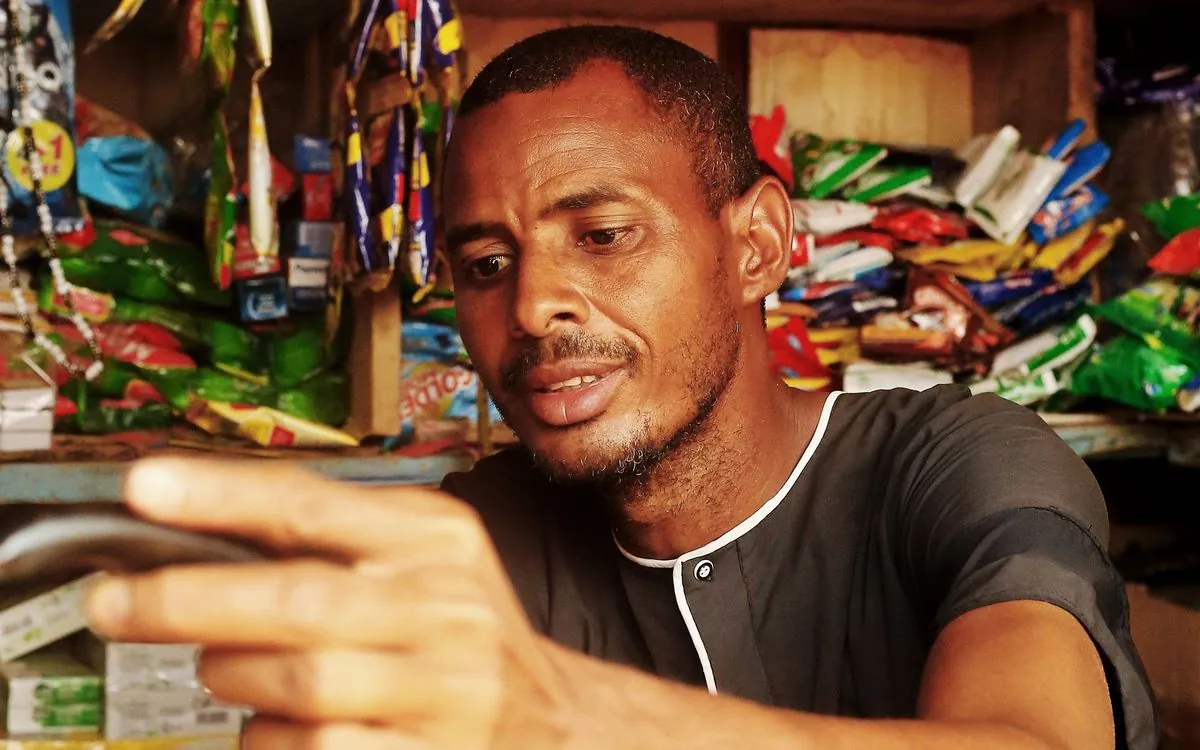
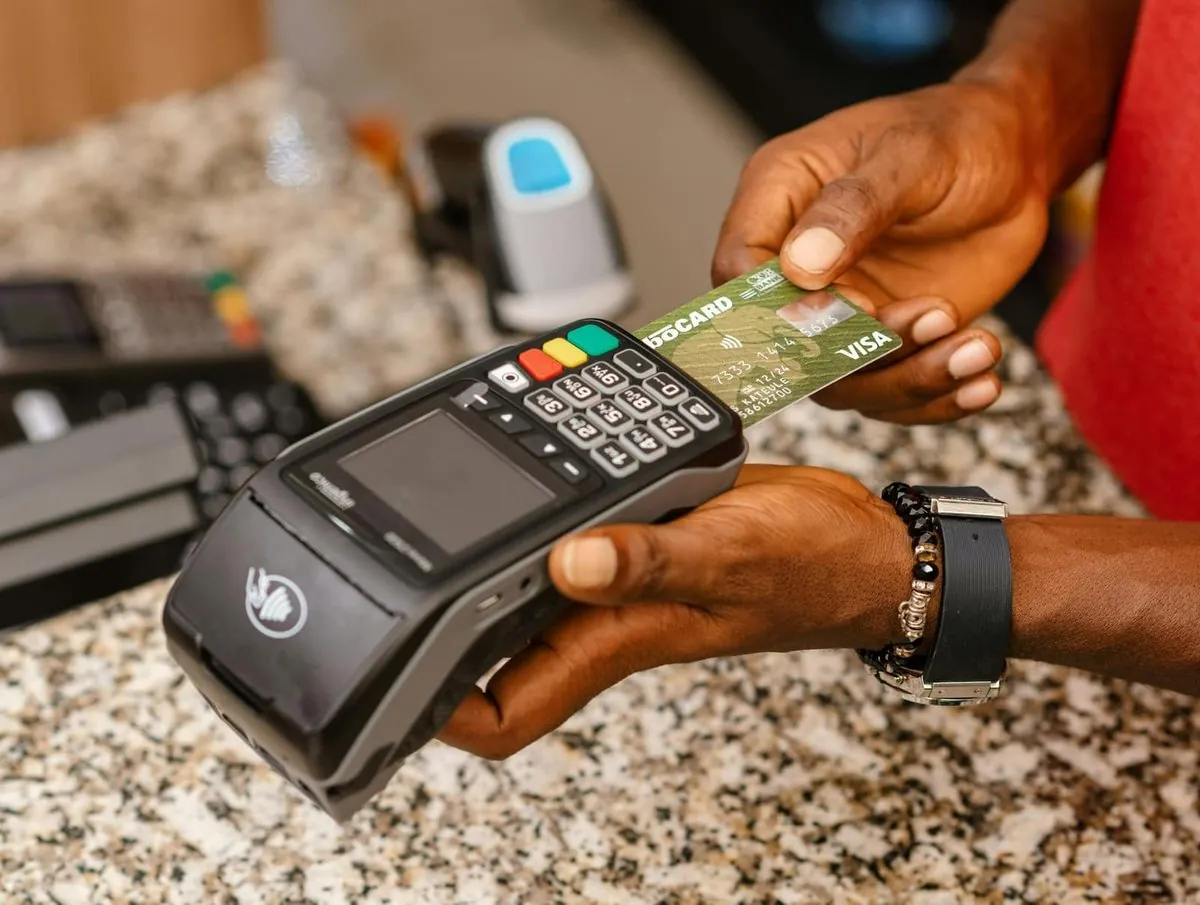
We believe small businesses deserve better tools for the work they do every day.
Too many still manage the complexity of running a business with little more than a notebook, a phone and their own memory. We believe simple, useful technology can help change that.

Our purpose
Make small businesses visible. To themselves first, then to the institutions that can help them grow.
Across Sub-Saharan Africa, small businesses are part of the fabric of everyday life. They create livelihoods, serve neighbourhoods, support households and keep local economies moving.
Yet many of them are almost invisible on paper. Their activity lives in exercise books, mobile money messages and the owner’s memory. That makes the business harder to manage, and harder for anyone else to understand.
The starting point is not to make small businesses use more technology. It is to make technology useful enough to become part of how they already work.
An illustrative story
Amina’s stall.
Amina is a composite character, drawn from the kind of business the programme is designed for. Her story shows what changes when everyday records become part of the working day.

Before
Amina has sold grains and dry goods from a market stall for eleven years. Her records live in a school exercise book, a phone full of mobile money messages and her own memory. She knows her business well. She just can’t show it to anyone.

Joining the programme
Her savings cooperative launches a small-business programme under its own name. A programme officer helps her set up a digital cashbook in one visit. Her first step is simple: photographing last week’s notebook pages so they become digital records.

Seeing her business
After a few weeks of recording sales and restocks, patterns appear. Saturdays are her busiest days. Restocking on Mondays leaves her short of cash midweek. Three customers still owe her money. She moves restocking to Thursdays and follows up on what she is owed every Friday.
A clearer conversation
Six months on, Amina has a consistent record of how her business really performs. With her consent, the programme shares a business profile with a lender in the cooperative’s network. The lender still makes its own decision. The difference is that it can now see the business it is talking to.
Multiply Amina by every business in your network. That is the opportunity the programme is built for.
What we believe
Five principles behind every decision we make.
These principles shape what we build, what we leave out and how we work with partners. They are also a good test of whether our thinking matches yours.
Start with what businesses already do.
Owners already sell, buy, lend and remember. Good tools capture that work instead of asking for new habits overnight.
Useful before clever.
A feature earns its place only if it saves time or makes a decision easier on a busy trading day.
Partners know their communities best.
The institutions closest to businesses should lead the programme. Technology should support their relationships, not replace them.
The business owns its story.
Information about a business should be collected with consent, used transparently and shared only in ways the owner understands.
Intelligence should inform people, not replace them.
Insights and scores help owners and institutions think. People still make the decisions.
Our SME mission
Help every business we reach build a clear, trusted record of its own activity, and use it.
We want practical digital business tools to be within reach of small businesses across Sub-Saharan Africa, through the institutions that already serve them.
We are starting with the everyday foundations: keeping records, understanding business activity and building confidence in the information a business can produce. Over time, that information can become more useful through guidance and business intelligence that is simple enough for an owner to use. The ambition is meaningful. The approach must remain practical.
Designed for everyday phones, patchy connections and owners using digital tools for the first time. Plain language, no accounting background needed.
Start with the records a business already keeps. Add capability only when it helps the business do something it could not do before.
Consent, transparency and care with business information. Insights support owners and institutions; they never make decisions for them.
What success looks like
- For owners: recording consistently, and using what they see to run the business better.
- For partners: a programme their businesses value, and a clearer view of the businesses they serve.
- For the ecosystem: more small businesses that institutions can understand, support and serve well.

Why the programme is partner-led.
The organisations closest to a community often understand its needs, relationships and opportunities best.
That is why the programme is designed for institutions to brand and operate themselves. They bring the programme to the businesses they serve, shape it around their objectives and manage the participant relationship.
The technology should enable that work, not stand in its way.
The technology behind the programme.
Vono is the programme and technology framework developed by XFIN Digital Technologies LLC FZ.
XFIN provides the technology under a commercial licensing relationship with partner institutions. The platform continues to evolve as XFIN develops improvements and new capabilities.
A partner’s public-facing programme may use its own name and identity, with a “Powered by Vono” attribution where appropriate.
Does our mission align with yours?
If your institution wants the small businesses it serves to grow stronger, more visible and better understood, we would like to hear about your programme.